2026 Sustainability: The Ability to Attract Tenants, Build Resilient Cash Flows, and Secure Capital.
January 13, 2026
5 Minutes

2026 Only profitable measures are truly sustainable
The real estate industry has entered a decisive phase.
Not a cycle, not a correction, but a **structural restart**.
2025 marked the end of ESG as a reporting narrative.
Too much compliance theatre, too many reports that have no effect and too few operational results.
We are witnessing a paradigm shift from sustainability as a declaration of intent to measurable measures!
The most important questions for 2026:
✔ Can rents above market rates be achieved?
✔ How resilient is the cash flow?
✔ How is the financing structured?
✔ How competitive are operational KPIs?
The real change: from ESG to commercial sustainability
ESG has not failed because sustainability has no value, but because it has lost its connection to operations and profitability.
It is now being replaced by comprehensible and transparent KPIs.
Measured by:
Utilisation and customer loyalty
‘Best in class’ operating costs
Cash flow volatility
Bankability and refinancing conditions
In short, sustainability has evolved from a reporting requirement to a performance metric in its own right.
2026 in light of the new reality - The pressure is structural.
Energy costs remain high
Capital and financing are more selective
Regulation penalises inefficiency
Space that is leased but not used (hidden vacancy) is devalued
Properties that cannot control operational metrics and are not transparent will fail.
The sustainability playbook for 2026
1⃣ Measurement replaces narrative: Annual ESG reports are outdated. What counts is continuous proof of: kWh/m², CO₂ intensity, peak loads, actual utilisation, comfort stability.
2⃣ Automation beats ambition: AI-driven optimisation ensures immediate OPEX reduction and fast ROI. Building technology must be set up instantly to work intelligently and in a networked manner before the building is modernised.
3⃣ Decisions are more important than dashboards: Dashboards explain AI delivers results.
4⃣ Operation becomes an evaluation factor: Efficient operation means higher NOI, lower risk premiums and better refinancing.
5⃣ The carbon footprint is monitored: Verified carbon savings are becoming increasingly important for valuation and financing.
🏆 Who will win in 2026? ✅ All those who make operational business metrics transparent.
❌ Losers: All those who rely on outdated valuation logic, confuse reporting with performance, and delay optimisation until refinancing forces them to do so.
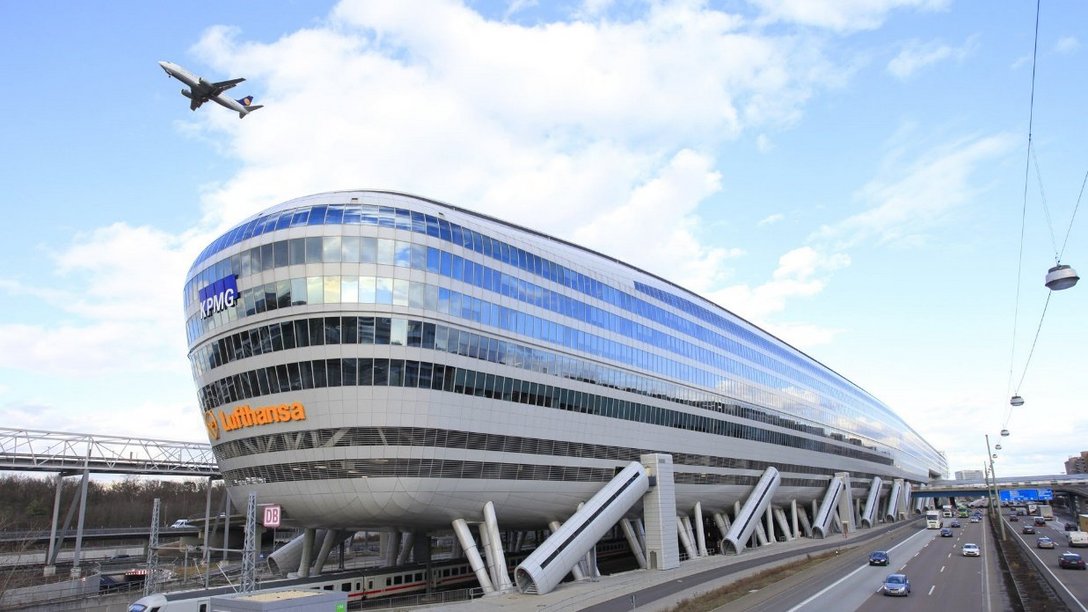
The example of ‘The Squaire’ in Frankfurt, where more than €500 million (half of the value) was destroyed in just five years, shows what happens when these fundamental principles are ignored.
Conclusion: In 2025, we changed the narrative – 2026 will change the market.
It is no longer about being green, but about building resilient cash flow. At the beginning of 2026, one thing is clear: structural changes are forcing action, and only profitable measures with verifiable ROIs are truly sustainable.
Our focus for the future is therefore simple and uncompromising. We want to translate sustainability into measurable operational performance, translate this performance into asset value and resilience, and deliver hard facts that stand up in valuation and financing discussions.
From 2026 onwards, we will offer the tokenisation of CO₂ savings. This makes sustainability performance tangible and, through blockchain technology, creates financeable assets.
These tokens are freely tradable, enable portfolio-level offsetting, and support the demonstration of green-premium market value for financing purposes.
I look forward to continuing this journey together with you and creating lasting value.
Yours sincerely,
Hubert Abt, FRICS
CEO & Founder workcloud24 AG
Author of this Article
Hubert Abt - Founder & CEO
INSIGHTS & RESOURCES
See other interesting news
Sed ut perspiciatis unde omnis iste natus error sit voluptatem accusantium doloremque laudantium, totam rem aperiam.
Want to learn more?
Book a free consultation with Hubert!
During the call we will explain the process in details and answer any extra questions you may have